BUCHAREST OF THE THIRD MILLENNIUM
-
1997
-
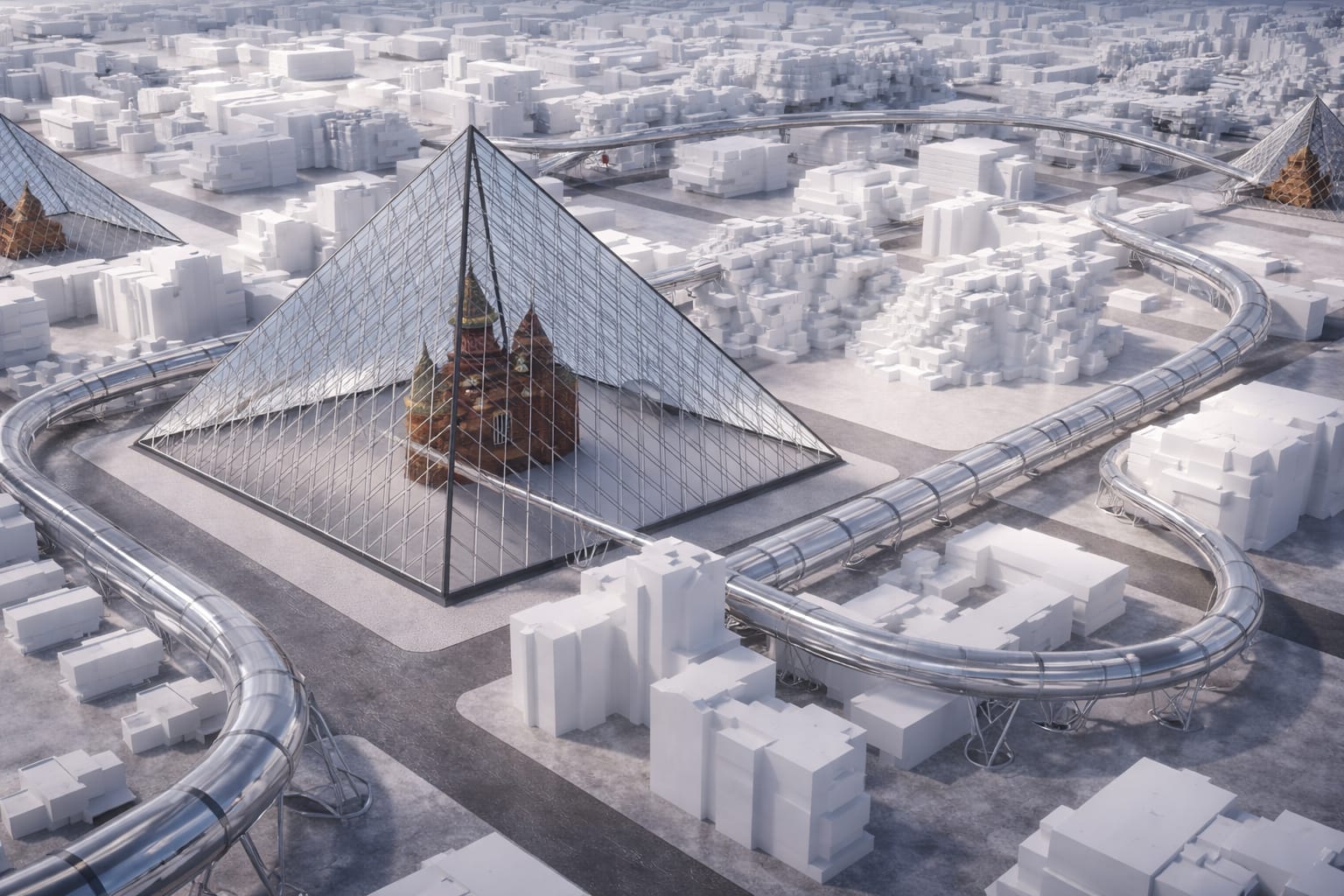
In 1997, my project “Bucharest of the Third Millennium” was presented at the Romanian Institute of Culture and Humanistic Research in Venice. As a student, I envisioned a city of the future where spirituality and urban life coexist harmoniously.
Inspired by André Malraux – “The next century will be spiritual, or it will not be at all” – I viewed churches not only as places of worship but as essential nodes of the community, centers of energy and urban connection.
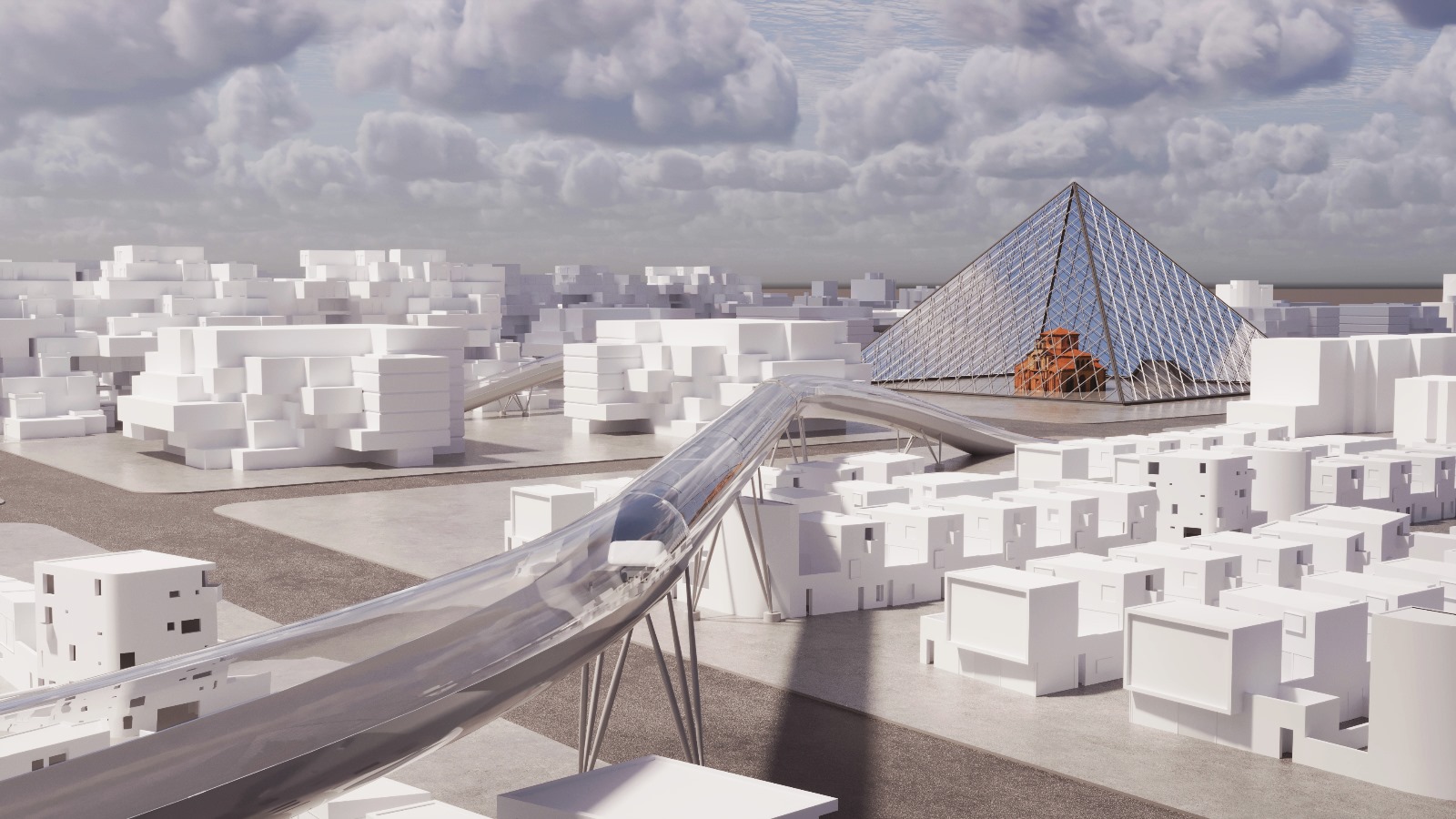
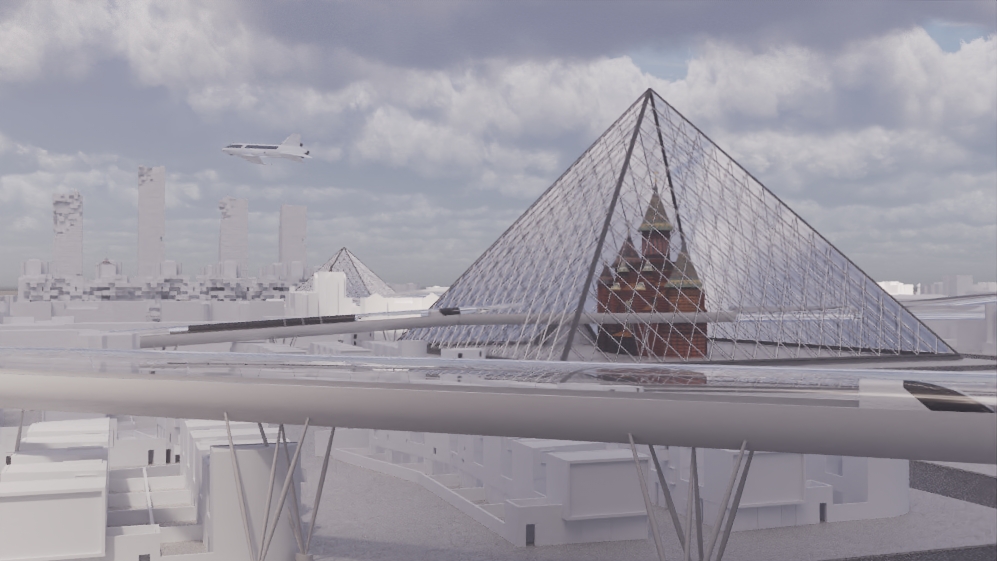
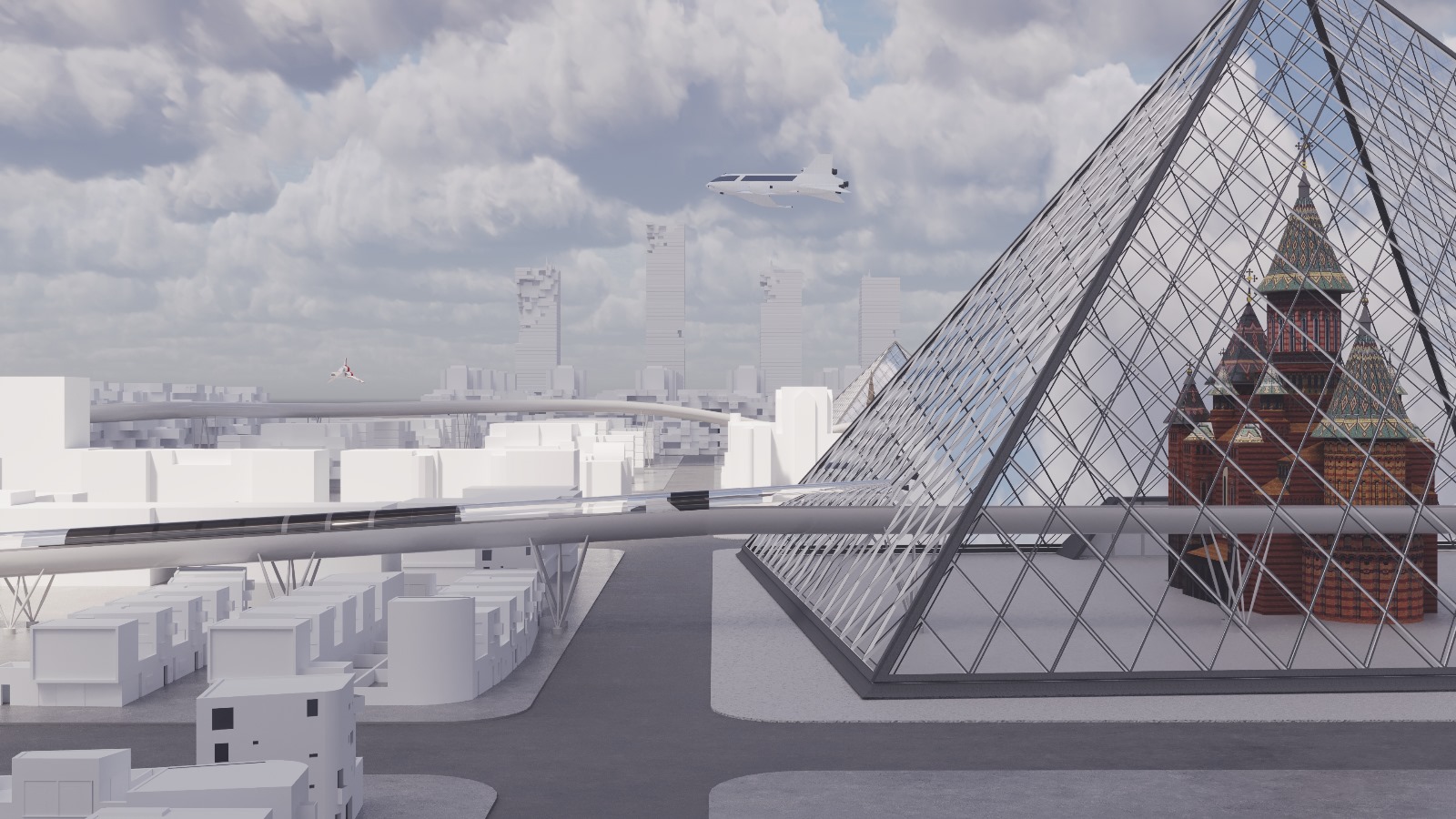
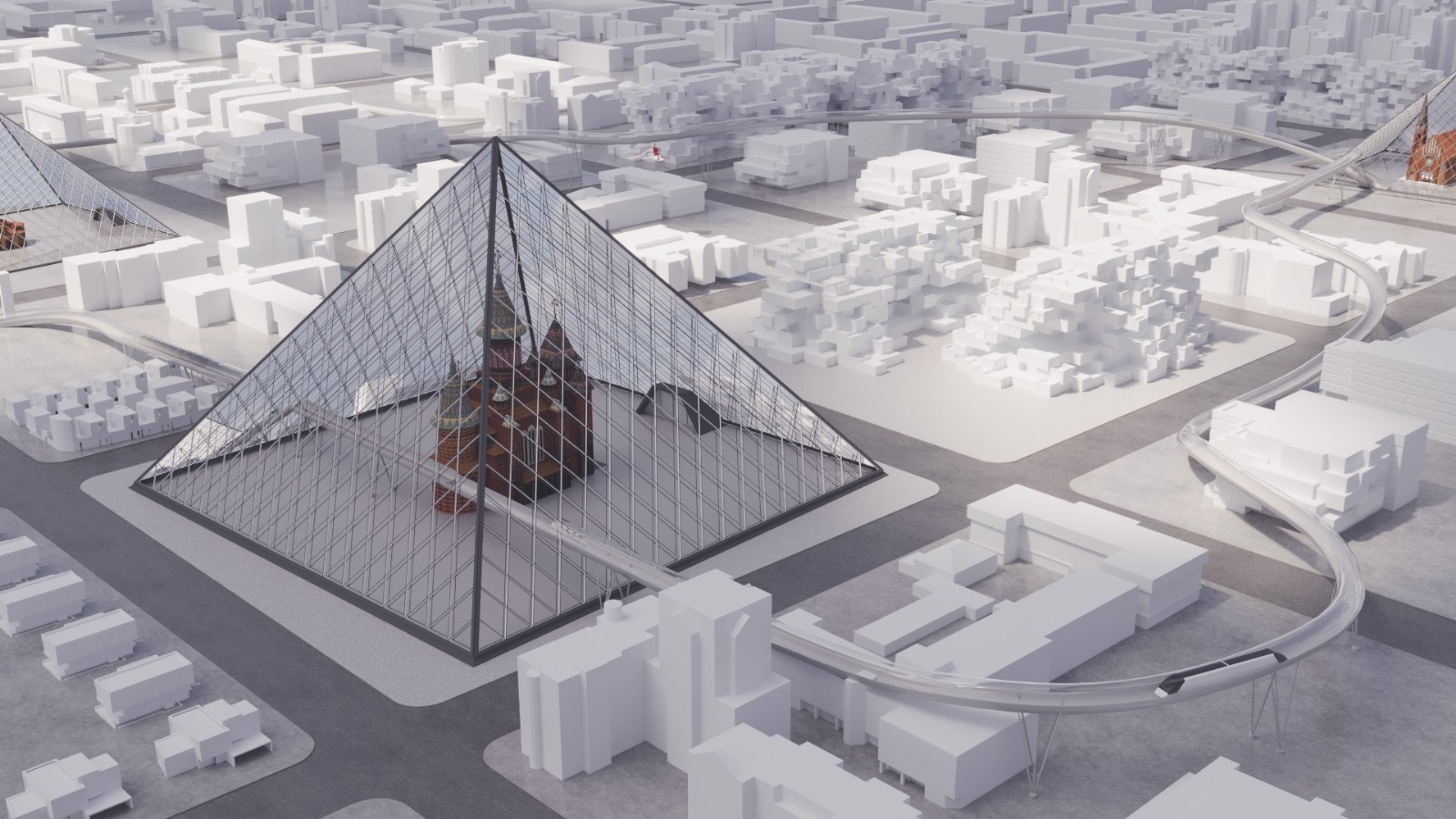
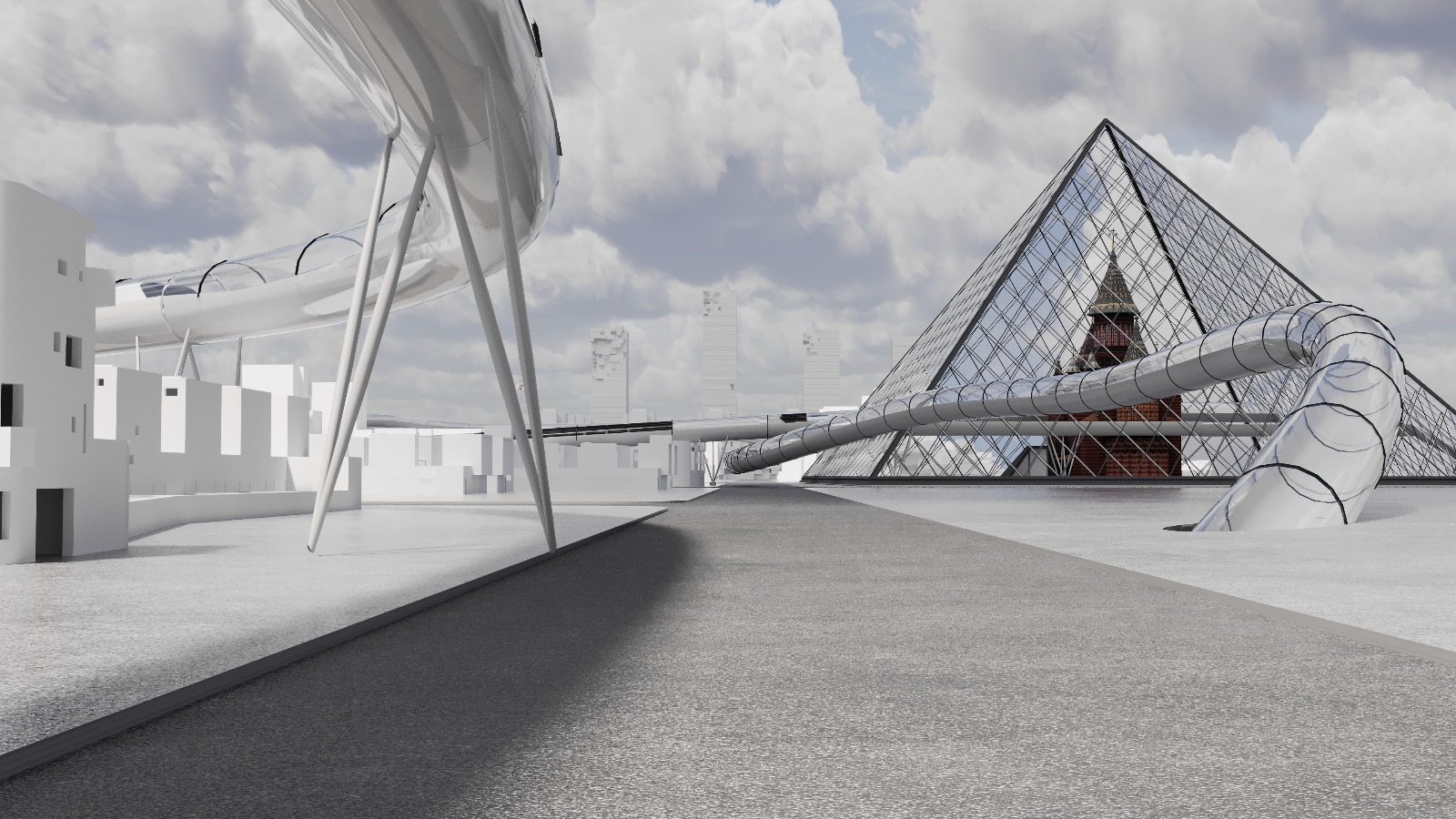
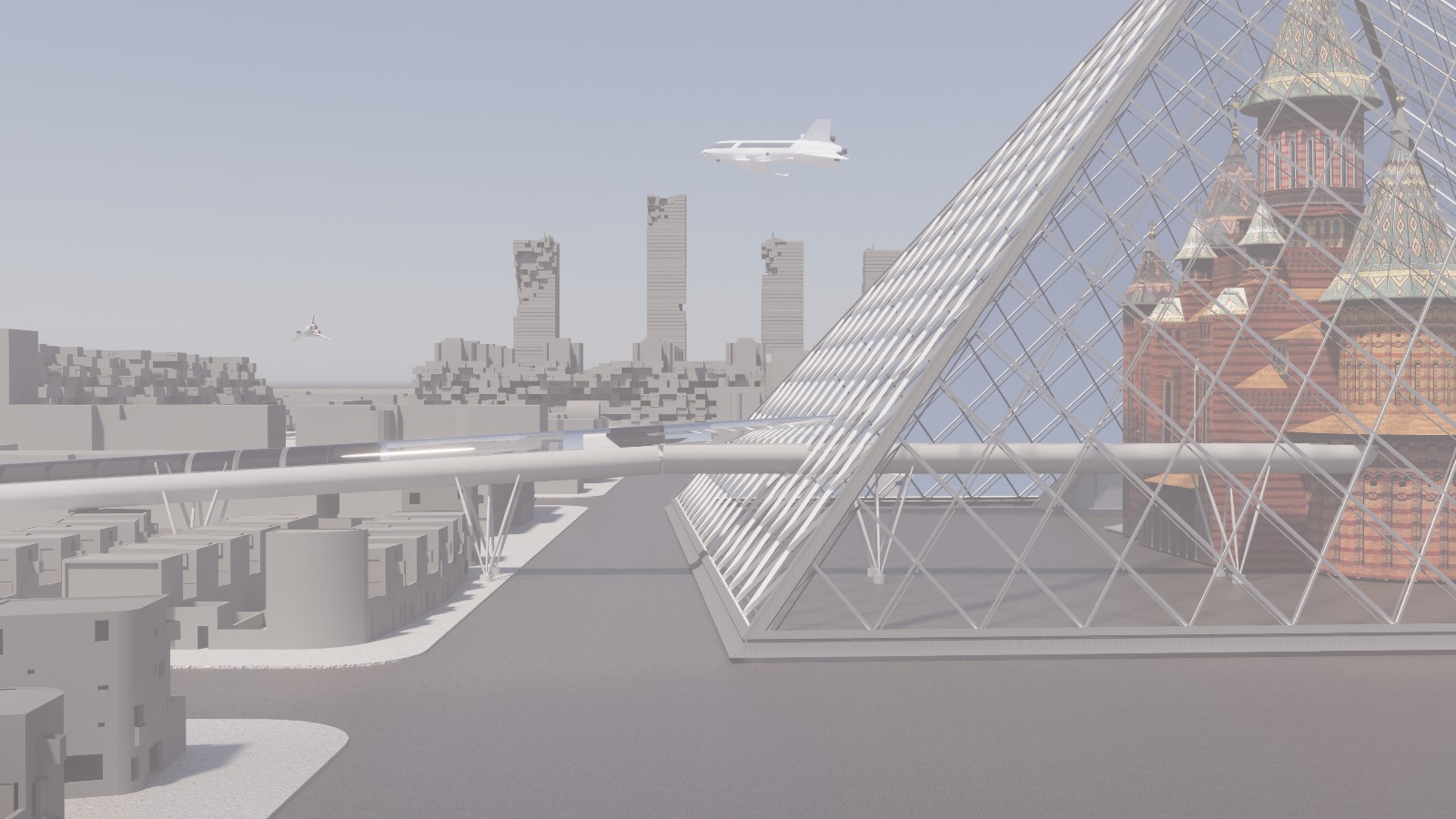
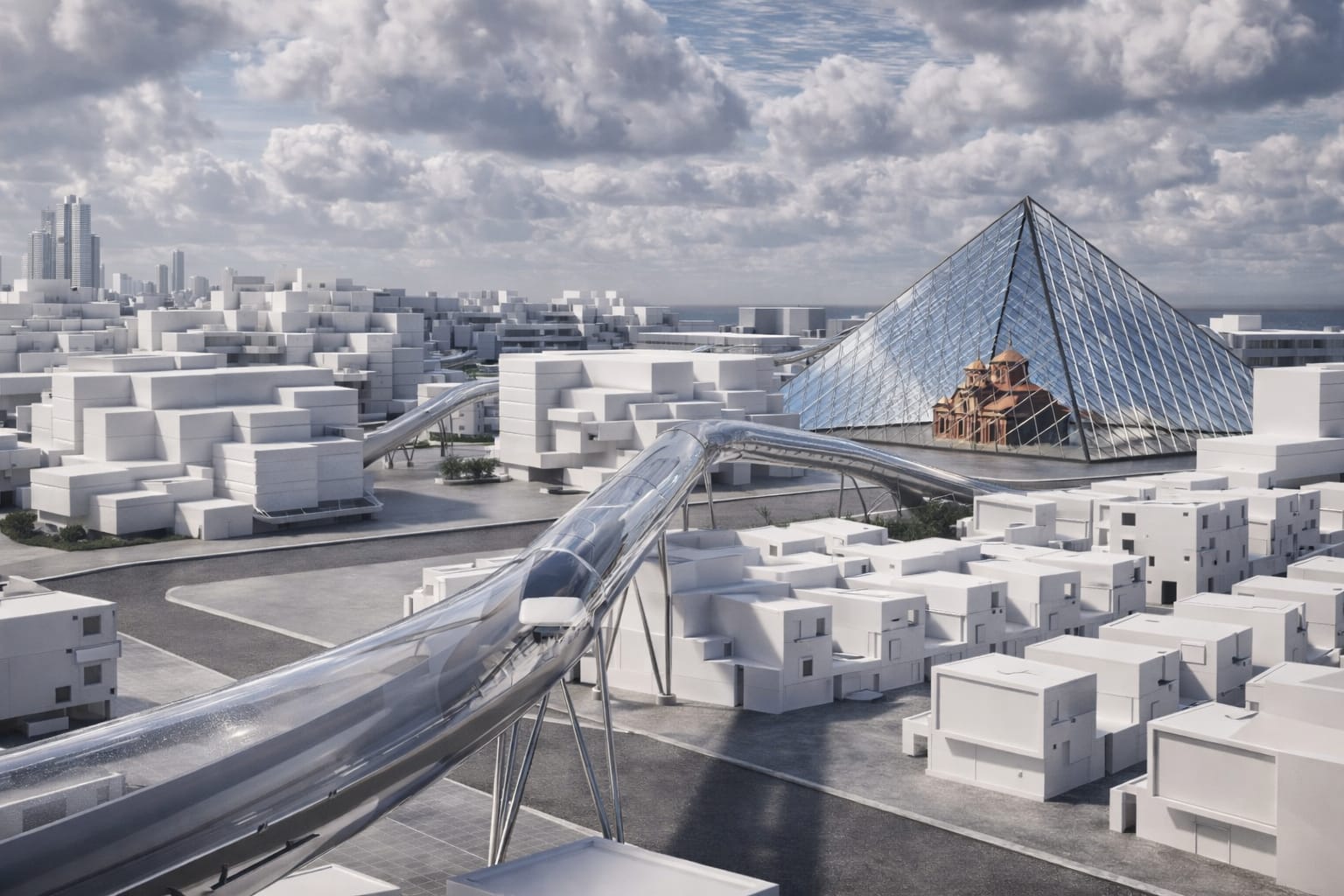
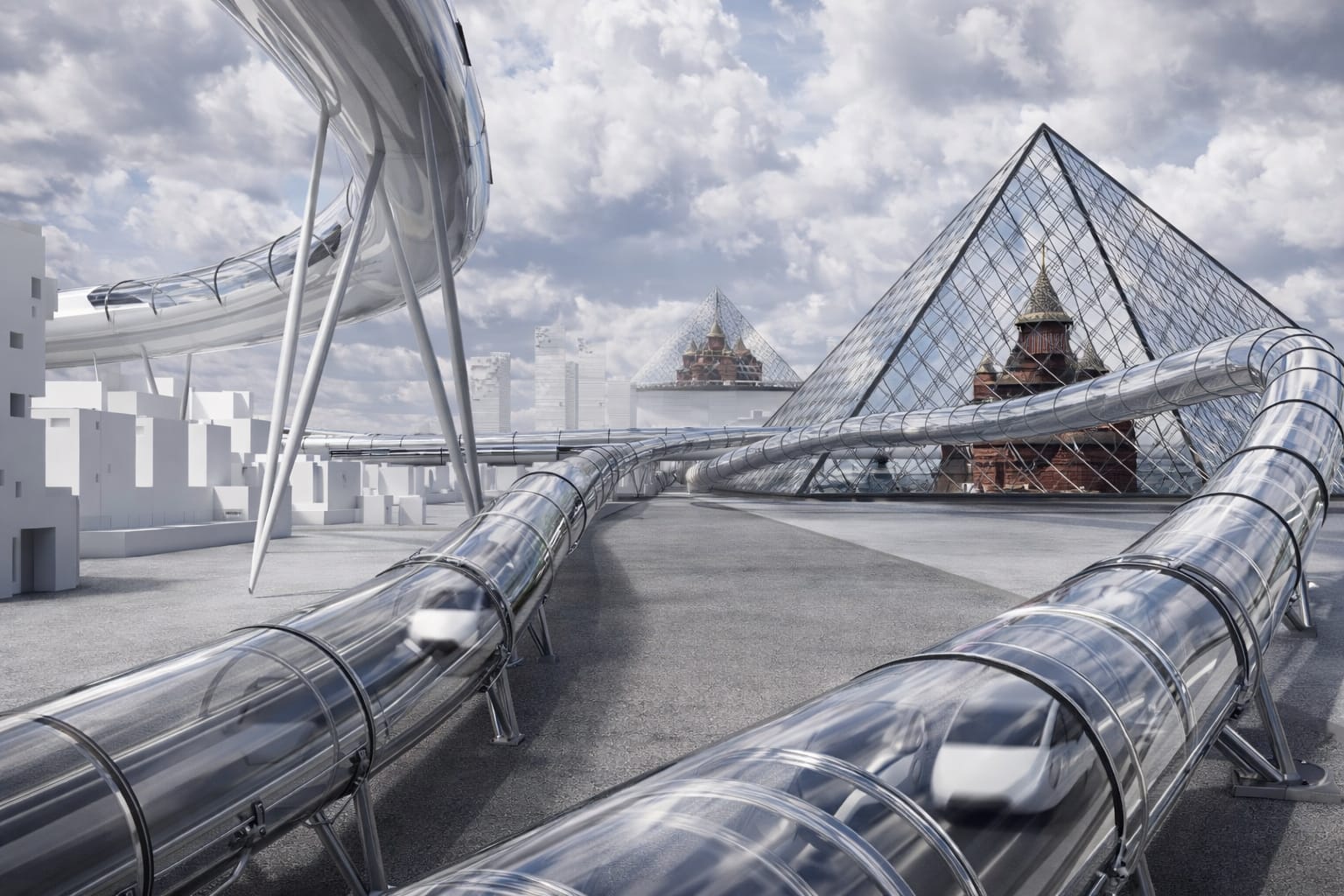
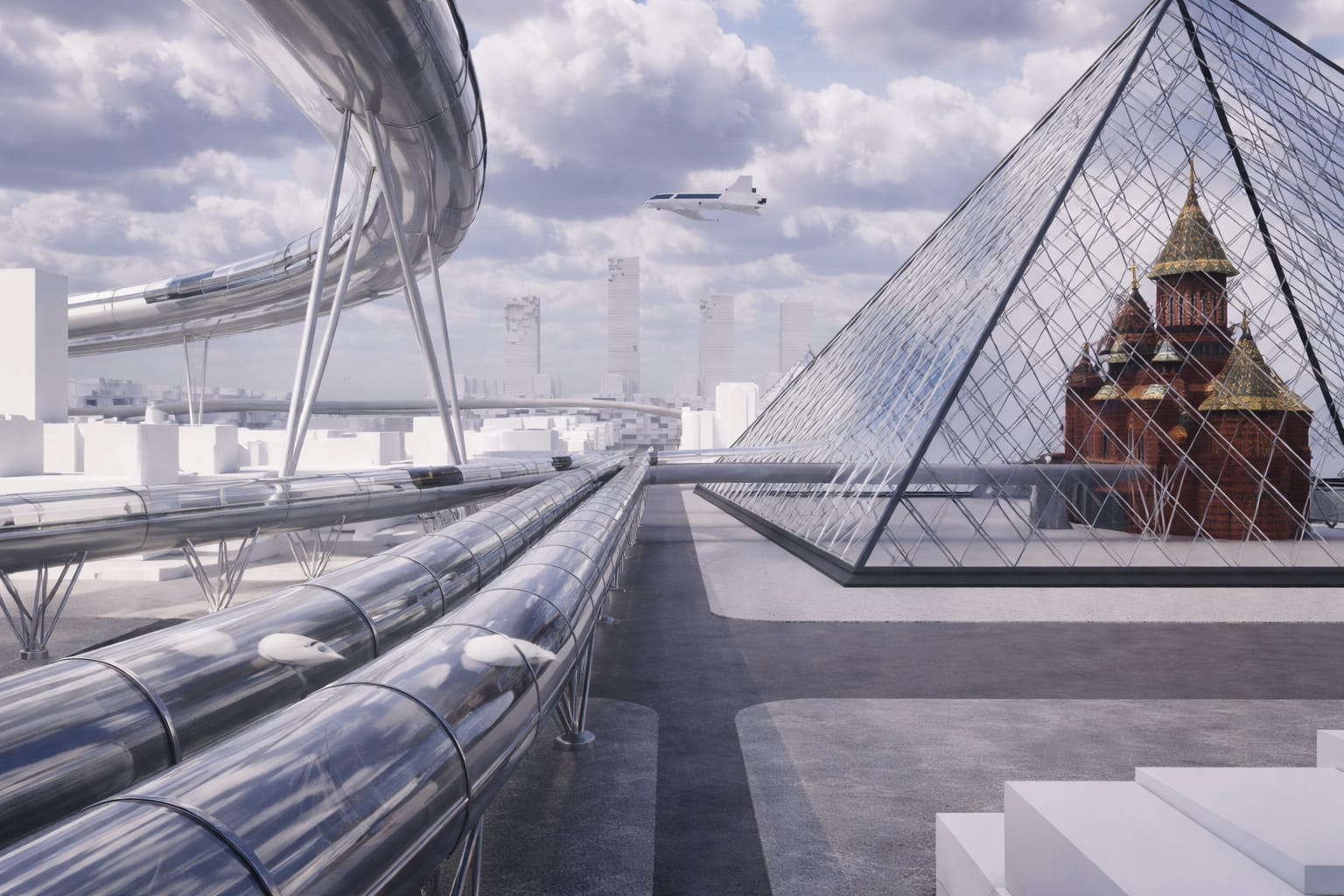
The project proposed protecting and transforming these buildings into vital hubs, using glass pyramids connected by aerial tubes. These connections not only facilitated circulation and interaction among people but also shielded the spaces from the harmful influences of the external environment. The tubes, designed as suspended transparent structures, suggested fluid and continuous urban mobility between these centers. The glass pyramids functioned both as protective shells and as visual amplifiers of the spiritual centers, revealing their silhouettes through layers of filtered light. Each church thus became an anchor point, a nucleus of urban cohesion.
The vision was based on the idea that the future of cities would not be defined solely by infrastructure and construction, but by elevated mindsets and connections: spiritual, social, and physical. Open communication, inclusion, and harmony were to form the foundation of urban life.
This vision from my student years remains relevant today, 30 years later.
I continue to believe that spirituality and practical life are not separate dimensions, but coexist in the practice of each individual and in the structure of society, supporting inclusion, collaboration, and global harmony.
My student project remains significant and contemporary, demonstrating that the vision of the city and community continues to be relevant and inspirational for how we can integrate spirit and everyday life into a living, sustainable balance.